
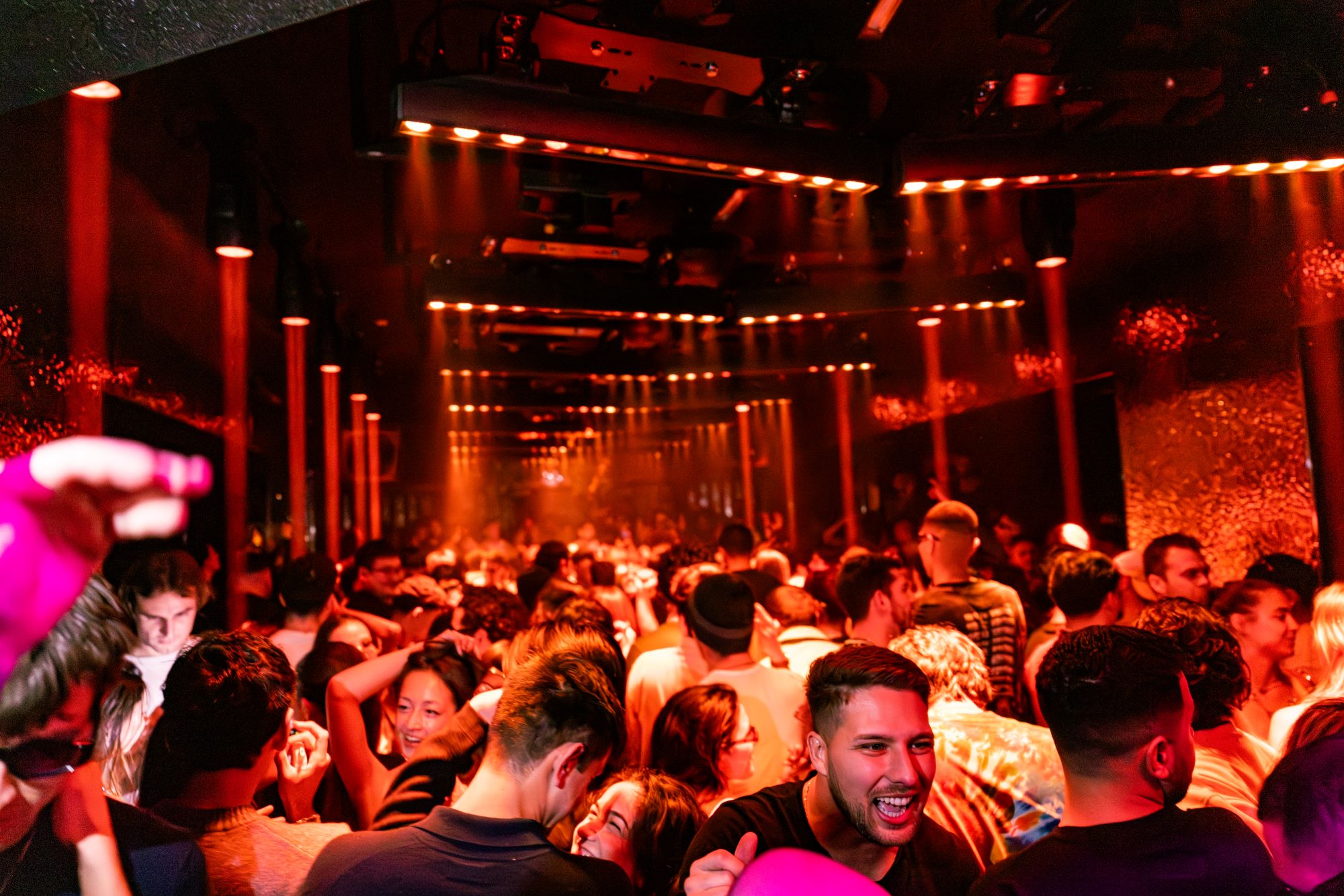
Choosing a private-event venue in Williamsburg or Brooklyn begins with the experience the room needs to support.
Immersive event design is a planning approach that aligns a guest journey, visual and sensory intent, interaction, and operations around one event objective. For private-event teams, the first step is not choosing technology. It is writing a clear brief that defines the audience, the moment guests should remember, and the questions to confirm with the venue and production partners before anything is booked.
What immersive event design means for a private event
For a private event, immersive does not need to mean a complicated technical build. It means designing the room and the guest experience with intention. The event should feel coherent from the first arrival cue through the final departure moment.
That could mean a brand activation with a clear reveal, a corporate gathering with a more considered arrival experience, or a social celebration where music, lighting, service, and guest movement support the same point of view. The useful question is simple: what should guests understand, feel, or do differently because they were in this room?
Start there. A strong answer gives the creative team, venue, production partners, and host a common decision filter. If an element does not support the objective, it does not need to be part of the brief.
Start with one event objective
Before discussing a visual reference, interactive moment, or vendor, write the event objective in one sentence. Keep it specific enough to guide choices, but open enough that the venue and production team can respond to the actual scope.
For example:
- We want guests to understand the product story before the presentation begins.
- We want an arrival sequence that moves guests from a busy day into an intimate, design-led evening.
- We want one participatory moment that gives the brand a natural reason to begin a conversation.
The objective is not a promise of a particular result. It is a planning tool. It helps the team decide whether the priority is welcome, education, connection, celebration, content capture, hospitality, or a more deliberate transition between program moments.
Map the guest journey before selecting creative elements
The guest journey is the sequence people actually experience, not a list of decor or production items. Map it before choosing creative elements so that every team is working from the same order of events.
Begin with five practical moments:
- Arrival: What should guests understand as they approach, enter, and check in?
- First reveal: What is the first visual, social, or hospitality cue that sets the tone?
- Participation: Where do guests watch, move, talk, or take part?
- Program and service transitions: How does the room shift between remarks, a reveal, food and beverage, music, or a new interaction?
- Departure: What is the final moment, message, or hospitality gesture that completes the experience?
This sequence keeps a concept grounded in guest flow. It also surfaces questions early: where people gather, whether the room needs a pause between moments, how an interaction affects circulation, and which handoffs need a clear owner.
Build a creative brief, not a technology shopping list
An immersive brief should describe the experience before it names equipment. Start with the visual mood, the role of sound, the level of guest participation, the pace of the evening, and any comfort or accessibility considerations. Then ask the appropriate creative and production partners what tools, staffing, and timing are suitable for the actual concept.
Use prompts such as:
- What should the room feel like when guests first enter?
- Which moments should guests observe, and which should invite participation?
- How will lighting, sound, service, and host cues support the event rather than compete with it?
- What should be calm, energetic, intimate, or social?
- What accommodations or alternate ways of participating should be considered for the expected guest group?
This approach avoids treating technology as the experience. A clear brief can support a simple, well-executed room just as effectively as a larger production concept. What matters is that the choices are deliberate and connected to the event objective.
Create a venue and production checklist
Bring the following information to a venue conversation before the scope is finalized:
- Preferred date, timing, and estimated guest range.
- Event purpose, audience, and key program moments.
- A simple guest-journey outline.
- Visual references and any proposed interactive, content, or service moments.
- The people responsible for creative, production, catering, guest communication, and approvals.
Then ask the venue and any relevant production partner to confirm the event-specific questions in writing:
- Which available spaces and layouts best support the planned guest flow?
- What timing should the team plan for access, setup, rehearsal, event use, and reset?
- How will arrival, circulation, accessibility, sightlines, service, and program moments work together in the selected configuration?
- Which production, safety, load-in, power, or operational requirements need to be confirmed for this exact event?
- Which responsibilities sit with the host, venue, caterer, and any outside production or creative vendor?
The broader private-event venue planning guide can help teams compare guest flow, proposal clarity, production questions, and venue fit before they choose a space.
Decide what will be measured
If the event has a business, brand, or communications objective, decide how success will be evaluated before the event takes place. Pick one primary outcome that matches the brief, such as informed attendance at a presentation, qualified conversations, participation in a programmed moment, post-event feedback, or a follow-up action.
The measurement plan should name the person or team responsible for it. If an event will collect contact information, photos, survey responses, or other guest data, the host should also confirm the consent process, the approved collection method, the data owner, and the reporting approach before the event. These are event-specific decisions, not venue promises.
The goal is a useful post-event conversation—not a generic claim about return on investment. Keep the reporting plan proportionate to the objective and make sure the guest experience remains clear, respectful, and easy to navigate.
Discussing an immersive brief with Unveiled
For a private event in Williamsburg, Unveiled’s public Private Events page describes customizable layouts for gatherings from 50 to 500 guests, along with a Danley sound system, programmable LED lighting, and audiovisual capabilities. Those published details are a starting point—not a technical specification.
Bring the brief to the private-events conversation and confirm the space, timing, accessibility, production requirements, and available support for the specific event. The more clearly the team can describe the guest journey and program moments, the easier it is to evaluate whether the venue and event plan are aligned.
Frequently asked questions
What should an immersive event venue brief include?
Include the event objective, audience, guest range, date and timing, a guest-journey outline, key program moments, visual references, desired participation level, and the questions that need venue or production confirmation.
Do immersive events require advanced technology?
Not necessarily. The starting point is a coherent guest experience. Some concepts may require specialist production, while others may rely on a clear arrival sequence, considered lighting and sound direction, hospitality, and a well-planned program. The right approach depends on the event objective and the confirmed venue and partner capabilities.
When should a production partner join the conversation?
Bring the relevant production or creative partner in as soon as the concept includes requirements that need technical, safety, content, staffing, or timing confirmation. Early coordination helps the team turn the concept into a workable brief rather than making assumptions after the venue or program has been set.
Bring the brief to the room
Immersive event design works when the guest experience, program, and operating plan point in the same direction. Begin with the objective, map the guest journey, ask the right venue and production questions, and keep every decision connected to the experience you want people to have.
Start a private-event conversation with Unveiled and bring the brief you want to test.